
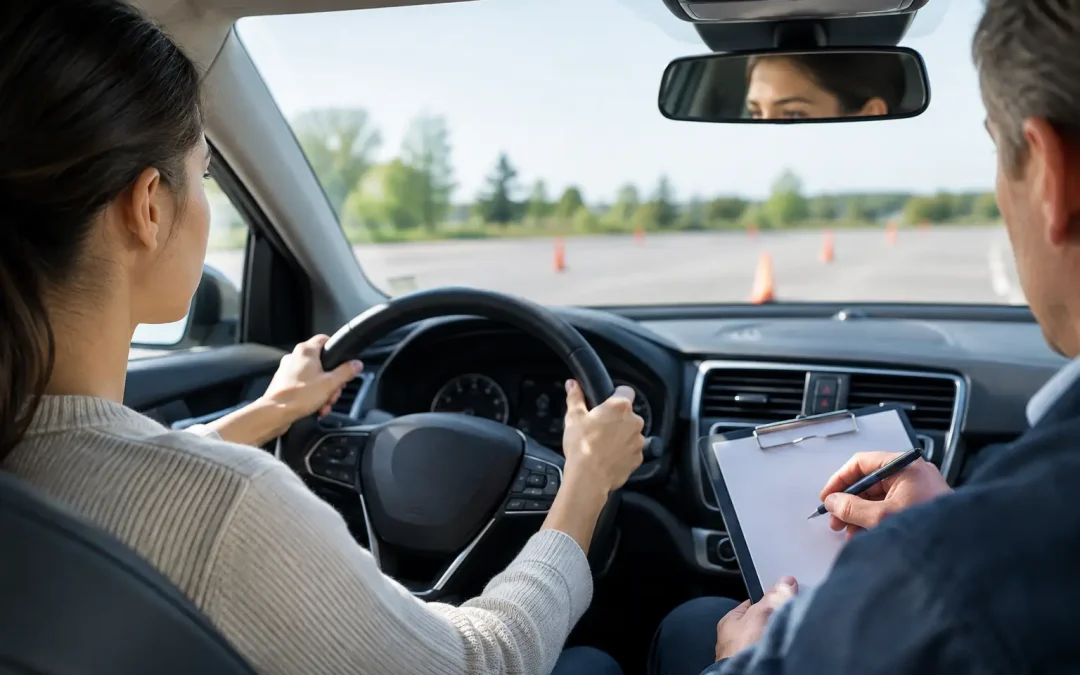
A road test can feel frustrating when you have spent months practicing, yet why do drivers fail even when they know the basics? Usually, it is not because they cannot make the car move, stop, or turn. Drivers fail when small gaps in observation, judgment, vehicle control, or confidence appear at the wrong moment. A road test measures whether you can make safe, independent decisions in real traffic, not whether you can complete a familiar route.
For learners preparing for a BC Class 7/N or Class 5 road test, the good news is that most unsuccessful attempts point to clear, correctable skills. Once you understand what is causing the problem, practice becomes more focused and progress becomes easier to measure.
Why Do Drivers Fail Their Road Test?
The most common reason is a pattern of small errors rather than one dramatic mistake. Missing a shoulder check before changing lanes, stopping too late at an intersection, turning too wide, or hesitating when it is safe to proceed can all show an examiner that a driver needs more supervised practice.
Some actions can end a test quickly because they create an immediate safety concern. Entering an intersection without enough space, failing to yield to a pedestrian, speeding through a school zone, or requiring the examiner to intervene are serious examples. But many drivers do not fail because of a single dangerous event. They lose confidence and make repeated errors after an early mistake.
A road test is also different from driving with a parent or friend. Familiar passengers often give reminders, choose easier routes, or overlook habits that would matter during an assessment. On test day, the driver must show consistent awareness without coaching.
Observation Is More Than Looking Forward
New drivers naturally focus on what is directly ahead. Safe driving requires a wider picture. You need to check mirrors, scan intersections, watch for pedestrians, recognize parked-car doors, and notice changing traffic conditions before they become urgent.
Examiners need to see that observation. A quick glance that cannot be seen, or a shoulder check performed after you have started moving sideways, may not demonstrate safe lane-change habits. Before moving from the curb, changing lanes, merging, pulling over, or leaving a parking space, check mirrors and look over the appropriate shoulder early enough to make a safe decision.
Intersections deserve special attention. Even with a green light, scan for vehicles turning across your path, late cross traffic, cyclists, and pedestrians. Having the right of way does not remove the responsibility to avoid a collision.
The habit behind strong observation
Good observation starts before the maneuver, not during it. For example, when approaching a lane change, check your mirror, signal, shoulder check, and then move only when there is a safe gap. When these actions become a calm routine, they are easier to perform under pressure.
Poor Speed Control Creates Problems Everywhere
Speed errors are not limited to obvious speeding. Driving well below the flow of traffic without a reason can also create uncertainty for other road users. So can approaching a turn too quickly, braking late, or failing to adjust for rain, limited visibility, pedestrians, or a narrow residential street.
Many learners know the posted speed limit but do not yet connect speed to space and time. A safe speed gives you room to observe, decide, and respond smoothly. If you enter a turn too fast, you may drift wide. If you follow too closely, you may brake sharply when traffic slows. If you rush toward a yellow light, you may make a poor decision at the intersection.
Practice judging speed in different settings: quiet residential streets, busier commercial roads, downhill sections, school zones, and intersections with limited sightlines. The goal is not to drive overly cautiously. It is to be predictable, controlled, and appropriate for conditions.
Anxiety Can Turn a Small Mistake Into a Failed Test
Test anxiety is real, and it affects drivers in practical ways. Nervous drivers may grip the wheel too tightly, forget a routine shoulder check, rush a parallel park, or stop replaying an earlier mistake long enough to miss the next instruction.
One imperfect maneuver does not automatically mean the test is over. Trying to guess the result while still driving often causes more errors than the original mistake. If a turn was not perfect, continue scanning, maintain the correct speed, and focus on the next decision.
A road-test warm-up can help because it gives drivers time to settle into the vehicle and review key habits before the assessment begins. It is particularly useful for drivers who have practiced mainly in a different vehicle or who feel tense at the start of a test.
Build a repeatable pre-test routine
Before driving, adjust your seat, mirrors, steering-wheel position, and head restraint. Take a moment to identify controls such as defrost, wipers, signals, and parking brake. Then remind yourself of a few essential priorities: scan early, keep space around the vehicle, obey signs and speed limits, and make each maneuver in a calm sequence.
A simple routine reduces the number of details you need to remember when nerves are high.
Parking Errors Often Start Before the Car Stops
Parallel parking, backing into a stall, and roadside stops can feel like the highest-pressure parts of a test. In reality, examiners are assessing more than whether the vehicle ends up between the lines or near the curb. They are watching your setup, speed, observation, steering control, and awareness of surrounding traffic.
Drivers often fail parking maneuvers by starting too quickly. They may not check for vehicles, cyclists, or pedestrians before reversing. They may rely only on the backup camera instead of turning and looking through the rear window as needed. Or they may become so focused on the curb that they forget to control the vehicle smoothly.
Precision matters, but safety comes first. If a maneuver is not lining up, it is usually better to make a safe correction than to force the car into position. Practice should include parking in different spaces and on different streets, not only repeating one familiar setup.
Local Rules and Old Habits Can Hold Experienced Drivers Back
Newcomers, internationally experienced drivers, and adults returning to driving may be comfortable behind the wheel but still need time to adapt to BC road rules and testing expectations. A habit that felt normal elsewhere may not meet local standards for shoulder checks, right-of-way decisions, school-zone speeds, turning position, or yielding to pedestrians.
This does not mean experienced drivers need to start from the beginning. It means they benefit from an honest assessment of their current habits. A few targeted lessons can identify which skills transfer well and which need adjustment before the test.
The same applies to licensed drivers who have not driven for years. They may remember vehicle control but need refreshed confidence in busier traffic, freeway merging, parking, or modern road environments with more cyclists and pedestrians.
Practice Must Be Specific to Work
More driving hours help only when those hours include feedback. Repeating the same commute may build comfort, but it may not improve lane changes, unprotected left turns, observation at intersections, or parking under pressure.
A productive lesson identifies the cause of an error, explains the safe correction, and gives the driver enough repetitions to make the correction feel natural. Personalized training is especially valuable after a failed test because the practice can focus on the actual skills that need attention instead of restarting with a generic plan.
At Aaron Driving School, one-on-one instruction gives learners a calm place to ask questions, correct habits, and prepare for the roads they will use in Coquitlam, Port Coquitlam, Port Moody, Burnaby, and surrounding areas. Clear feedback should never leave a driver embarrassed or guessing. It should show them exactly what to do differently next time.
The Goal Is Readiness, Not Just a Passing Score
Passing matters, but a license is only the beginning. The habits that help you pass a road test are the same ones that protect you after the examiner is no longer in the passenger seat: checking before moving, managing speed, leaving space, anticipating risk, and staying calm when conditions change.
If a previous test did not go as planned, treat it as useful information rather than a verdict on your ability. With focused practice and patient coaching, the skills that once felt stressful can become the habits that help you drive with confidence for years to come.